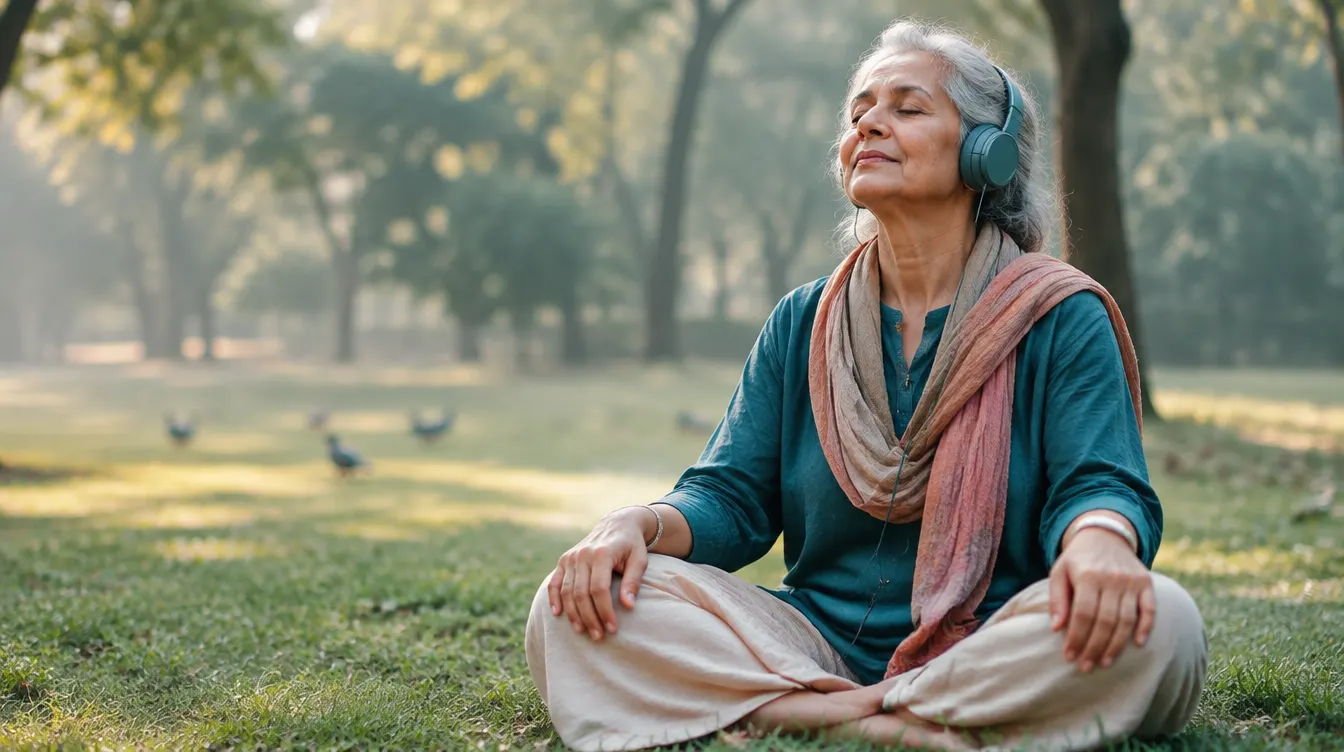
When you feel anxious, your breathing usually changes first: it gets faster, higher in the chest, sometimes you hold it without noticing. That pattern keeps the body on alert. The good news is that it works the other way too. When you deliberately slow your breathing, and especially lengthen the out-breath, your heart rate tends to settle and your body starts to calm down.
You don't need to master all six techniques below. Try each one once, then keep the one or two that feel best and practise them on calm days, so they're ready when you need them.
Try It Now: Breathe With the Circle
Our free on-screen breathing guide grows as you breathe in and shrinks as you breathe out. Choose a pattern and a length, and just follow it. No sign-up needed.
1. Slow 4-6 Breathing
The simplest and, for most people, the most useful. Breathe in through your nose for a count of 4, then out for a count of 6. The longer out-breath is what calms you. Keep it soft. You're slowing the breath down, not taking huge gulps of air.
Best for: everyday anxiety, before a meeting, any time you notice you're tense.
2. Belly Breathing
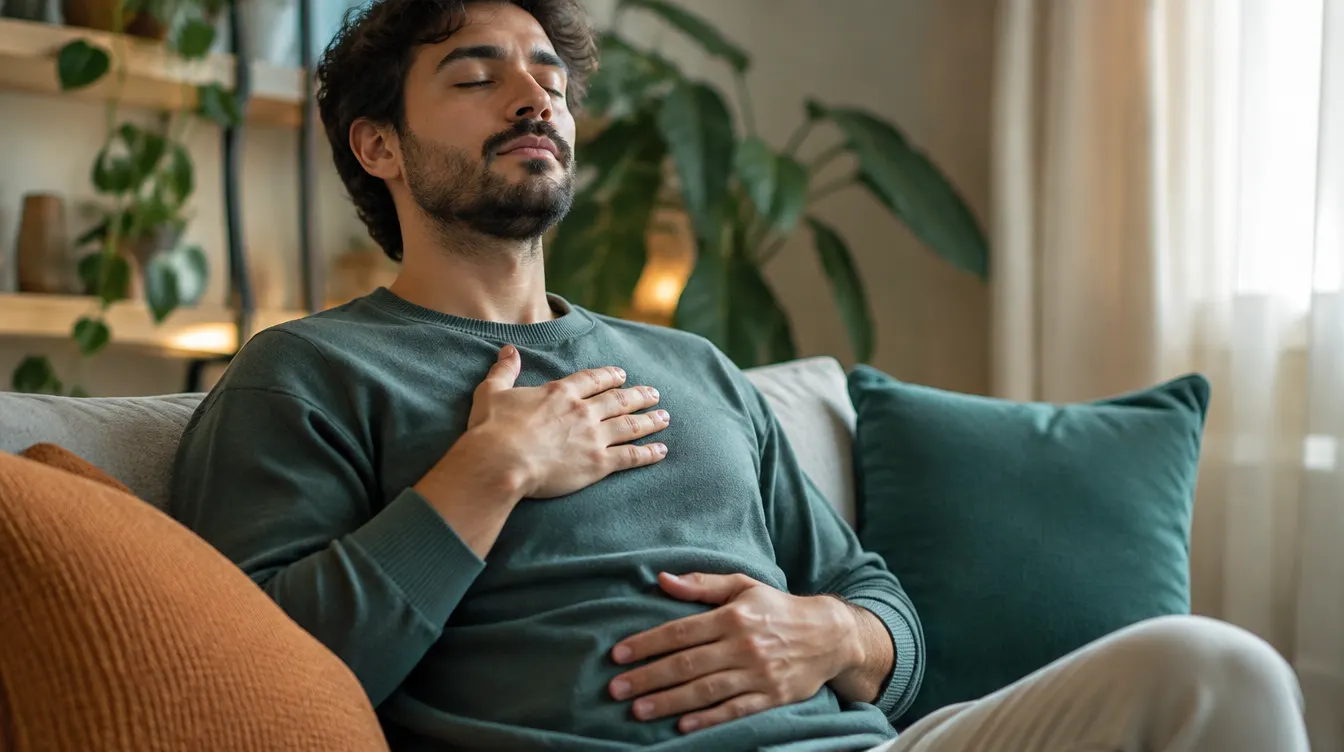
Place one hand on your chest and one on your belly. Breathe so that the lower hand rises and the upper hand stays fairly still. Anxious breathing tends to live high in the chest; moving it down to the belly helps the whole body soften. The hands also give you something to focus on.
Best for: when your chest feels tight or you can't seem to get a full breath.
3. Box Breathing
Breathe in for 4, hold for 4, breathe out for 4, hold for 4. Picture tracing the four sides of a square. The steady, even rhythm gives a racing mind something simple to follow.
Best for: racing thoughts, or when you need to stay focused, like before a presentation or exam.
4. The 4-7-8 Breath
Breathe in through your nose for 4, hold for 7, breathe out slowly through your mouth for 8. It's a slower pattern that many people like before sleep. If holding your breath makes you more anxious, leave out the hold and just make the out-breath long.
Best for: winding down in the evening or in bed. See also meditation for anxiety and sleep.
5. The Double Sigh
Take a breath in through your nose, then a second short sip of air on top of it, then let it all go in a long, slow sigh through your mouth. Repeat two or three times. It's quick, discreet and surprisingly effective at releasing tension.
Best for: a quick reset in the middle of a stressful moment.
6. Counting the Out-Breath
Breathe naturally, and silently count each out-breath: one… two… up to ten, then start again. If you lose count, simply begin at one. This turns breathing into a gentle meditation and keeps your attention from drifting back to worries.
Best for: when you have a few quiet minutes and want to settle more deeply. Try our 5-minute meditation for anxiety next.
A Guided Breathing Meditation

3-Minute Soham Breathing Meditation for Anxiety. A short practice that pairs the breath with a simple silent sound, "So" on the in-breath and "Ham" on the out-breath.
Tips for Breathing Exercises
- Gentle, not deep. Over-breathing can make you light-headed. Aim for slow and quiet.
- Practise when you're calm. A technique you've used fifty times on ordinary days is far easier to remember when you're anxious.
- Give it two minutes. The first few breaths can feel awkward. Most people notice a shift after a couple of minutes.
- Stop if it feels worse. If focusing on your breath makes you more anxious, try a grounding technique instead, like noticing five things you can see. See how to calm anxiety fast.
These are relaxation techniques, not medical treatment. If you have a heart or lung condition, check with your doctor before trying breath holds. If anxiety or panic is affecting your daily life, please speak to your GP or a mental health professional. In Australia you can call Beyond Blue on 1300 22 4636 or Lifeline on 13 11 14.
Frequently Asked Questions
What is the best breathing exercise for anxiety?
For most people, slow breathing with a longer out-breath, such as breathing in for 4 and out for 6. It's simple, works almost anywhere and doesn't involve holding your breath.
How quickly do breathing exercises work?
Many people feel a little calmer within one to three minutes. The effect builds with regular practice.
Can breathing exercises help a panic attack?
Slow, gentle breathing can help you ride out the physical symptoms. If you have panic attacks, it's worth learning a technique while you're calm and talking to your GP about support.