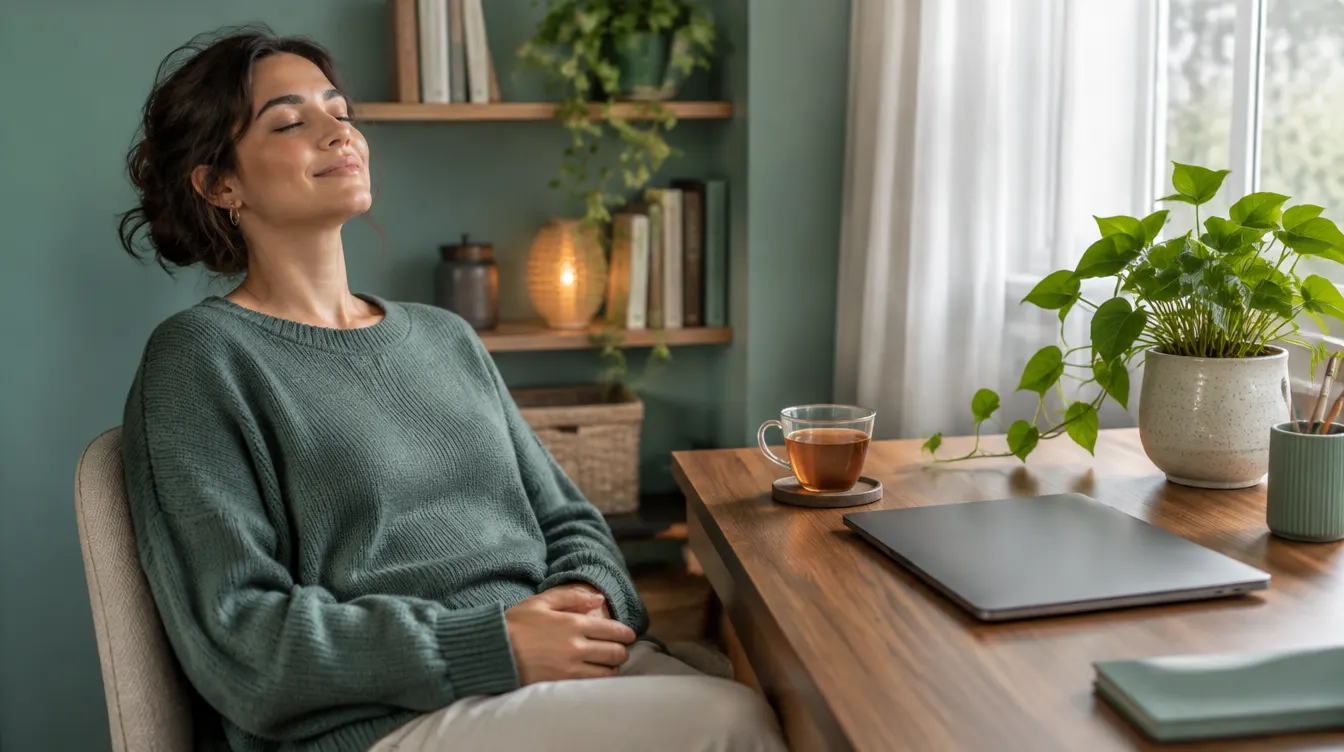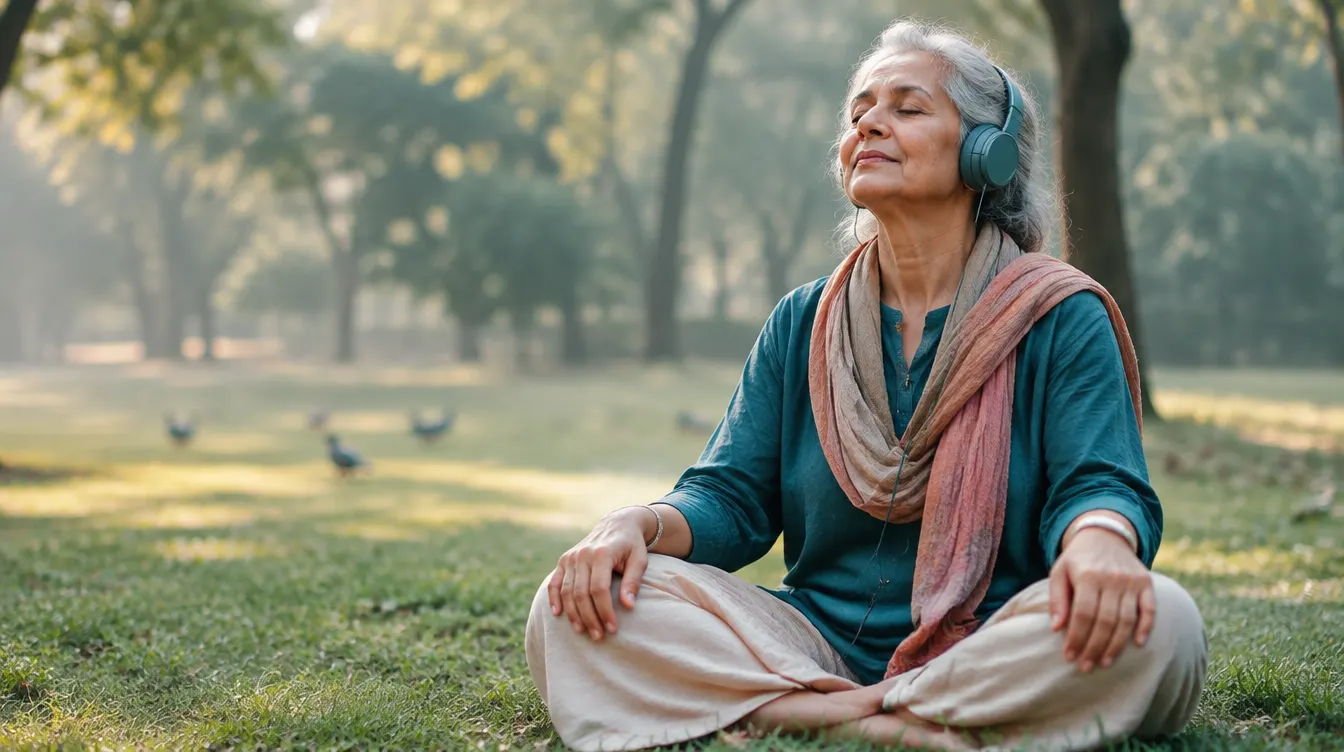
Mindfulness simply means paying attention to what's happening right now, on purpose, without judging it. Mindfulness meditation is the practice of that skill: you rest your attention on something in the present, like your breath or the sounds around you, and each time your mind wanders off into worry, you gently bring it back.
It sounds almost too simple. But anxiety is mostly about the future, and every time you return to the present you're teaching your mind a new habit.
A 10-Minute Mindfulness Meditation for Anxiety

10-Minute Mindfulness Meditation for Anxiety. Calm a racing mind through sound awareness.
How Mindfulness Helps With Anxiety
- You notice anxiety earlier. Instead of only realising once you're overwhelmed, you start to catch the first signs: a tight chest, a "what if" thought.
- You relate to thoughts differently. A thought like "this will go badly" becomes something you notice, not a fact you must obey.
- Your body learns to settle. Regular practice gives your nervous system more time in a calm state.
Mindfulness-based approaches are widely used alongside other support for anxiety and stress. It's not a quick fix, but a skill that grows with practice.
Try It Yourself: Sound and Breath
- Sit comfortably, close your eyes, and take three slow breaths.
- Listen. For a few minutes, notice the sounds around you, near and far: traffic, birds, the hum of a fridge. Don't name or judge them; just let them come and go.
- Move to the breath. Feel the air at your nostrils, or your belly rising and falling.
- When your mind wanders, notice where it went, and gently return. You might need to do this many times.
- Finish by noticing your whole body sitting here, then open your eyes.
Sounds are a useful anchor for anxious people, because they don't require you to focus on your breathing, which can sometimes make anxiety feel worse.
More Mindfulness Meditations
- 10-Minute Mindfulness Meditation for Anxiety and Clarity
- 13-Minute Breath Awareness Meditation for Beginners
- 8-Minute Grounding Meditation for Anxiety
- 12-Minute Morning Mindfulness Meditation
Mindfulness in Everyday Life
You don't have to sit still to be mindful. Try doing one ordinary thing each day with full attention: the first sip of your coffee, washing your hands, the walk to your car. Notice the temperature, the textures, the sounds. These small moments add up.
New to meditation? Meditation for Beginners has simple guides to get started.
Frequently Asked Questions
Is mindfulness good for anxiety?
Many people find it helpful, especially with regular practice. If you have an anxiety disorder, use it alongside support from your GP or a psychologist, not instead of it.
How long should I practise mindfulness each day?
Start with five to ten minutes. Consistency matters more than length.
What's the difference between mindfulness and meditation?
Mindfulness is a quality of attention. Meditation is a practice for training it. Mindfulness meditation is one type of meditation.