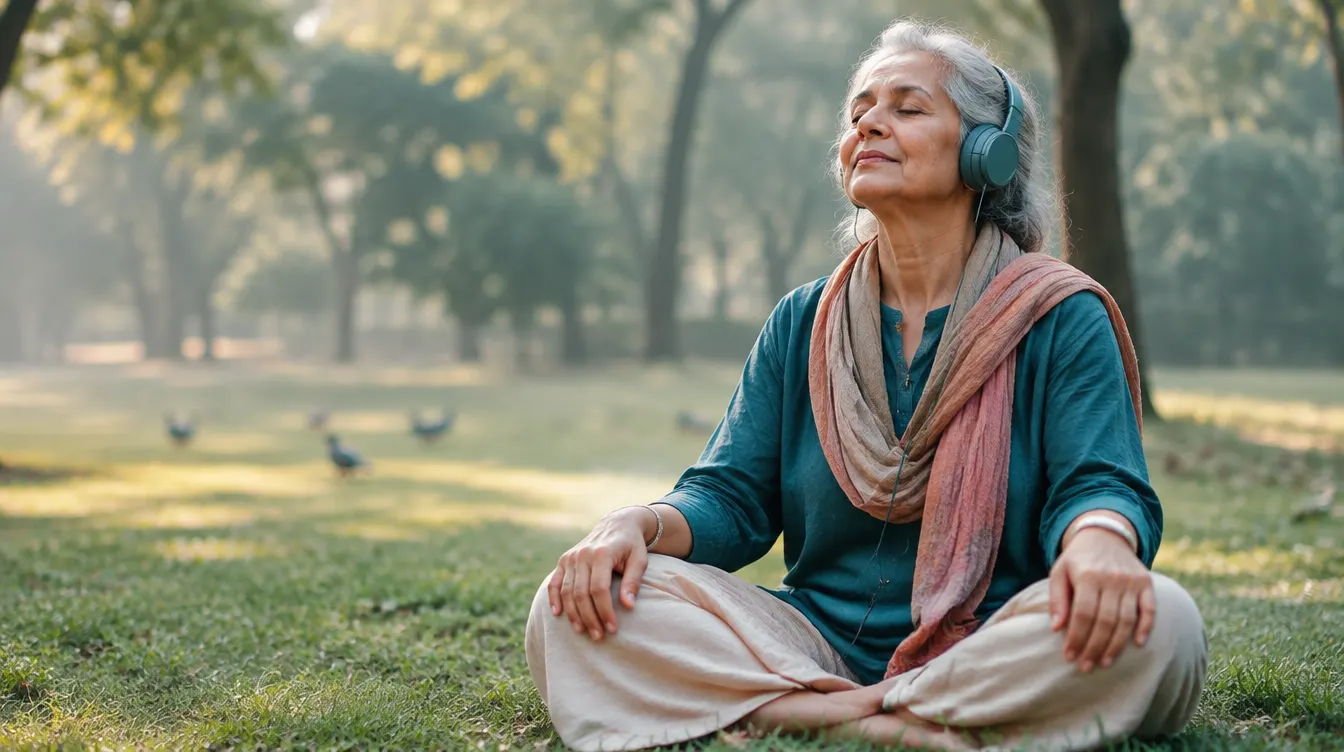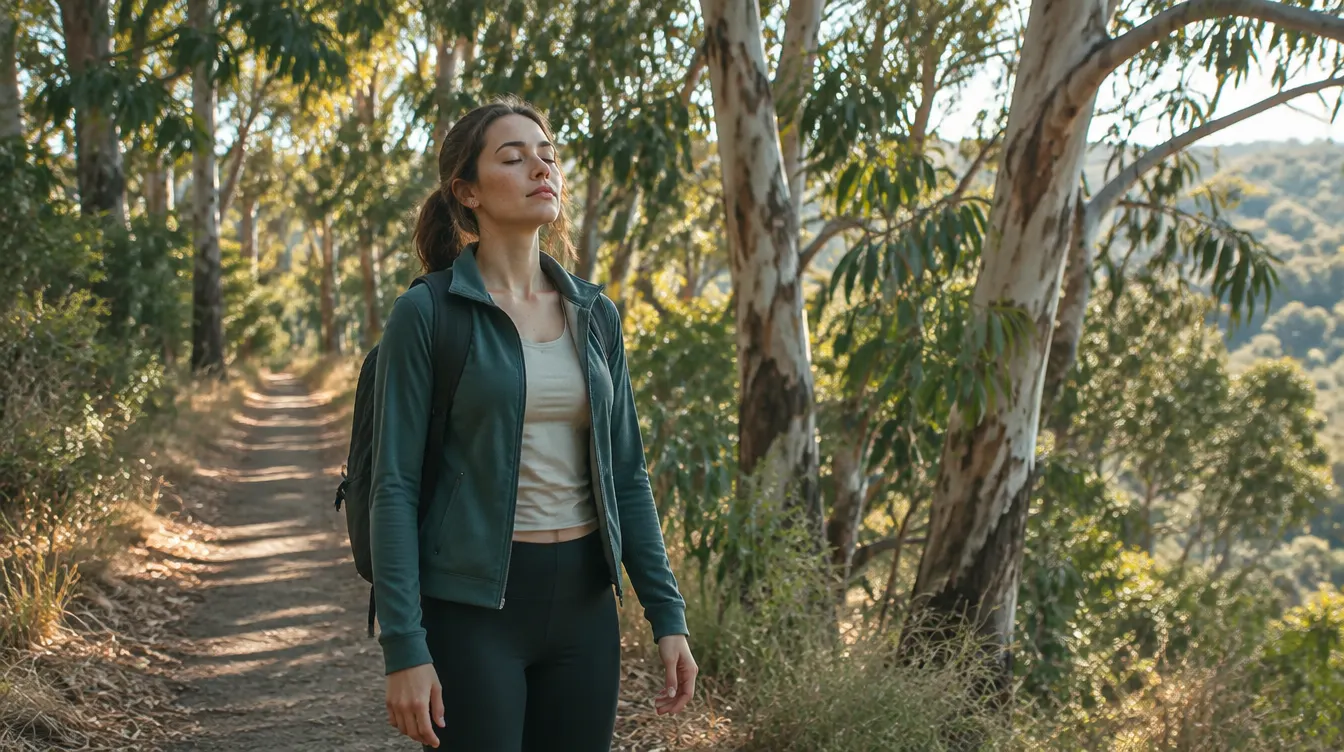
Anxiety is your body's alarm system switching on: a faster heartbeat, tight chest, racing thoughts, the urge to escape. It's uncomfortable, but it isn't dangerous, and it always passes. The aim isn't to force it away. It's to give your body clear signals that you're safe, so the alarm can switch off sooner.
1. Make Your Out-Breath Longer
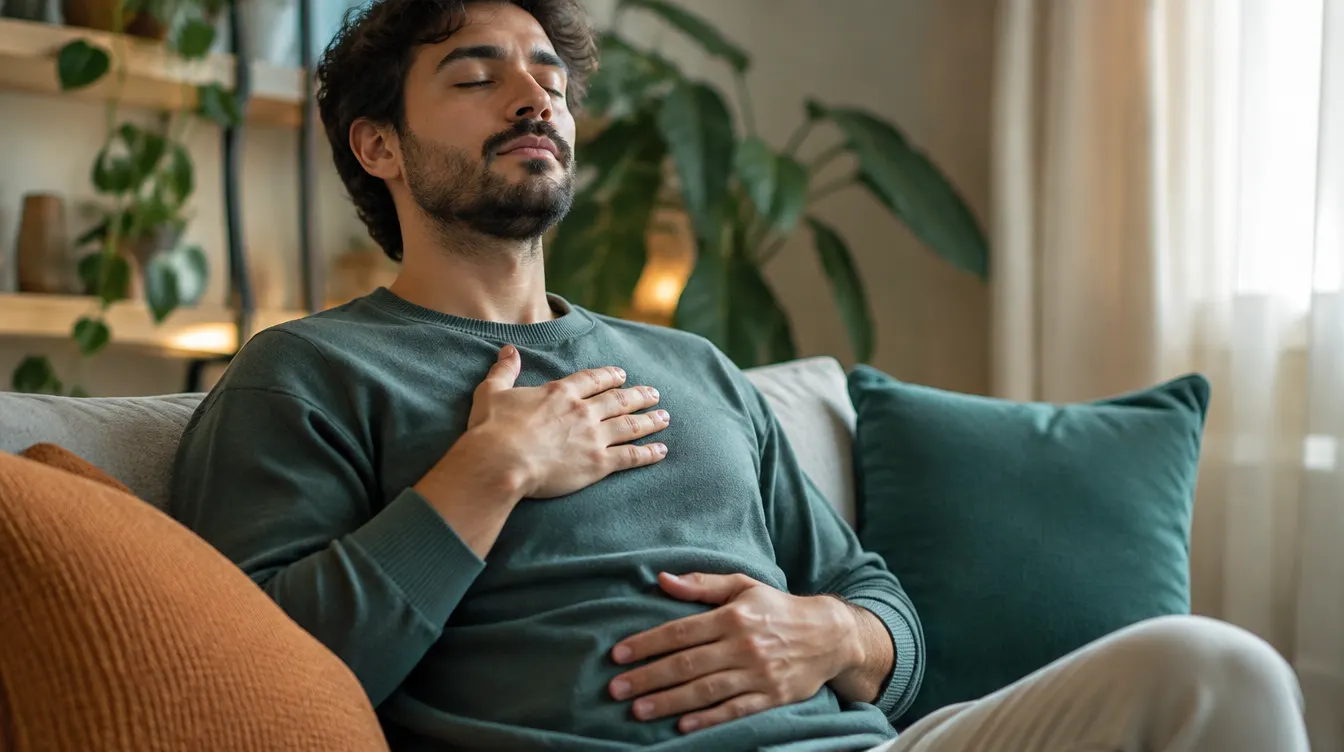
Breathe in gently for 4, then out slowly for 6 to 8, as if blowing through a straw. Repeat for a minute or two. A long out-breath is one of the quickest ways to slow your heart rate. If you'd like a guide, use our breathing circle.
2. Ground Yourself With 5-4-3-2-1
Look around and name, silently or out loud:
- 5 things you can see
- 4 things you can feel (your feet on the floor, your clothes, the chair)
- 3 things you can hear
- 2 things you can smell
- 1 thing you can taste, or one slow breath
It pulls your attention out of "what if" and back into the room you're actually in.
3. Feel Your Feet
Press your feet into the floor. Notice the weight of your body in the chair or on the ground. Anxiety lives in the head and the future; your feet are always here and now.
4. Cool Down
Splash cold water on your face, hold something cold, or step outside into fresh air. A change in temperature can interrupt the spiral and bring you back into your body.
5. Name It to Tame It
Say to yourself: "This is anxiety. It feels awful, but it will pass." Labelling the feeling, rather than fighting it, puts a little distance between you and it. You're the one noticing the anxiety. You are not the anxiety.
6. Relax One Part of Your Body
Unclench your jaw. Drop your shoulders away from your ears. Soften your hands. You don't have to relax everything at once. Just one area is enough to start.
7. Move Gently
Walk, stretch, or shake out your arms and hands. Anxiety prepares your body to move; a few minutes of gentle movement can use up some of that energy.
When the Wave Has Passed
Once you feel a little steadier, a short guided meditation can help your body settle further:

5-Minute Meditation for Anxiety Relief. Soham breathing to help you calm down.
Calm Over the Longer Term
Quick techniques help in the moment. What makes anxious moments less frequent is what you do on ordinary days: a few minutes of mindfulness or breathing practice, enough sleep, moving your body, and less caffeine. Small, regular practice teaches your nervous system what calm feels like.
Get Support
If anxiety is affecting your work, relationships or sleep, or you're having panic attacks, please talk to your GP. They can help with a plan and, if needed, a referral to a psychologist. In Australia you can call Beyond Blue on 1300 22 4636 or Lifeline on 13 11 14, any time. If you have chest pain or think you may be in danger, call 000.
Frequently Asked Questions
What is the fastest way to calm anxiety?
Slow your breathing with a longer out-breath, and ground yourself in your senses. Both send signals of safety to your body within a minute or two.
How long does an anxiety wave last?
The most intense part usually peaks and starts to ease within minutes, especially if you don't fight it. Remind yourself that it will pass.
Is it anxiety or a panic attack?
A panic attack is a sudden, intense surge of fear with strong physical symptoms. If you're unsure, or it's the first time, seek medical advice to rule out other causes.