When you're anxious, sitting still for half an hour can feel impossible. Ten minutes is different. It's short enough to fit before work or after the school run, and long enough for your body to actually come down a few notches. This 10-minute meditation for anxiety uses slow breathing, your body and a bit of honest noticing. You don't need any experience.
Follow the Guided Meditation

10-Minute Mindfulness Meditation for Anxiety and Clarity. If you'd rather rest on sounds than on the breath, try the 10-minute sound awareness meditation.
The 10-Minute Script
Read it once. Then set a timer for ten minutes, close your eyes and follow it as best you remember. It doesn't have to be perfect.
Minute 1: Arrive
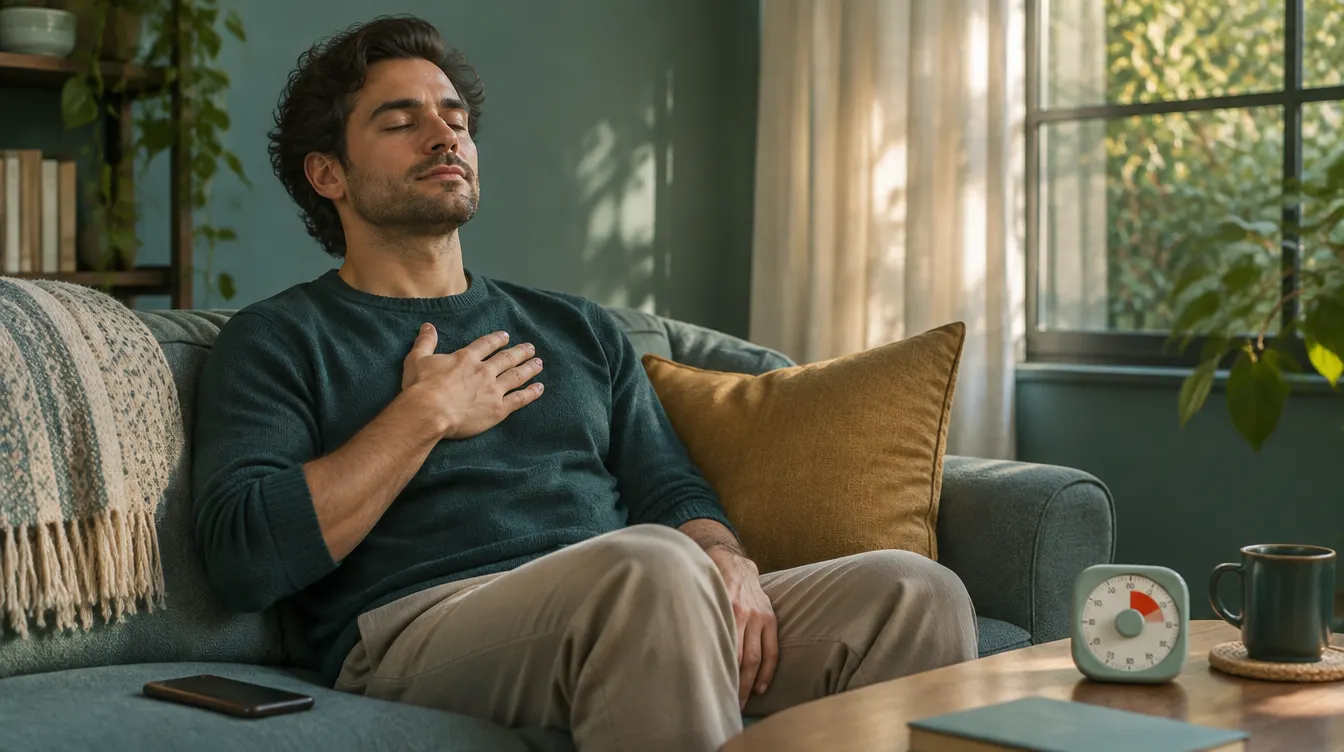
Sit with your feet on the floor and your hands in your lap. Close your eyes, or just let them rest on a spot on the floor. Notice that you've stopped. For the next ten minutes, nothing else needs you.
Minutes 2–3: Slow the breath
Breathe in through your nose for four, and out for six. Keep it soft. That longer out-breath nudges your body out of "on alert" and towards rest. If counting makes you tense, forget the numbers and just make the out-breath a little slower than the in-breath.
Minutes 4–5: Ground through the body
Feel your feet on the floor. Feel the chair under you. Feel your hands. Now let a few things go: unclench your jaw, drop your shoulders, let your stomach soften. Anxiety lives in the body as much as in your head, and the body is often the easiest place to start calming it.
Minutes 6–7: Name and allow
Have a look at what's here. Maybe a worry about tomorrow, a tight chest, a restless itch to get up. Give it a quiet one-word name: "worry", "tight", "planning". You're not trying to fix it or make it leave. Let it sit there, and keep breathing slowly around it.
Minutes 8–9: Rest in sound and breath
Open your attention to the sounds around you. A car outside, the fridge, a bird. Let them come and go. Then come back to the feeling of your breath. Your mind will wander off. When you notice, come back. That moment of coming back is the actual practice.
Minute 10: Return
Notice how you feel compared with ten minutes ago. Even a small difference counts. Pick one kind thing to aim for in the next hour, wiggle your fingers and toes, and open your eyes slowly.
Making 10 Minutes a Daily Habit
The meditation itself is the easy part. Remembering to do it is harder. A few things that help:
- Tie it to something you already do every day, like breakfast, lunch, or getting home.
- Use the same chair or corner each time, so sitting there becomes the cue.
- If mornings are your worst time, try the morning meditation for anxiety.
- On busy days, do the 5-minute version, or even one minute with the breathing circle. Something beats nothing.
Want to keep learning? Meditation for Beginners has free, step-by-step guides to build your practice.
Meditation can really help with everyday anxiety, but it isn't a replacement for proper care. If anxiety is getting in the way of your work, sleep or relationships, please talk to your GP. In Australia you can call Beyond Blue on 1300 22 4636 or Lifeline on 13 11 14, any time.
Frequently Asked Questions
Is 10 minutes of meditation a day enough for anxiety?
For a lot of people, yes. Ten minutes every day tends to do more than an hour once a week.
What if I feel more anxious when I meditate?
It happens, especially at the start. Keep your eyes open, put your attention on your feet or on sounds instead of your breath, and keep sessions short. If it keeps happening, talk to a teacher or a health professional.
Should I meditate sitting or lying down?
Sitting helps you stay awake. Lying down is fine, but you might nod off, and that's better saved for a meditation for anxiety and sleep.