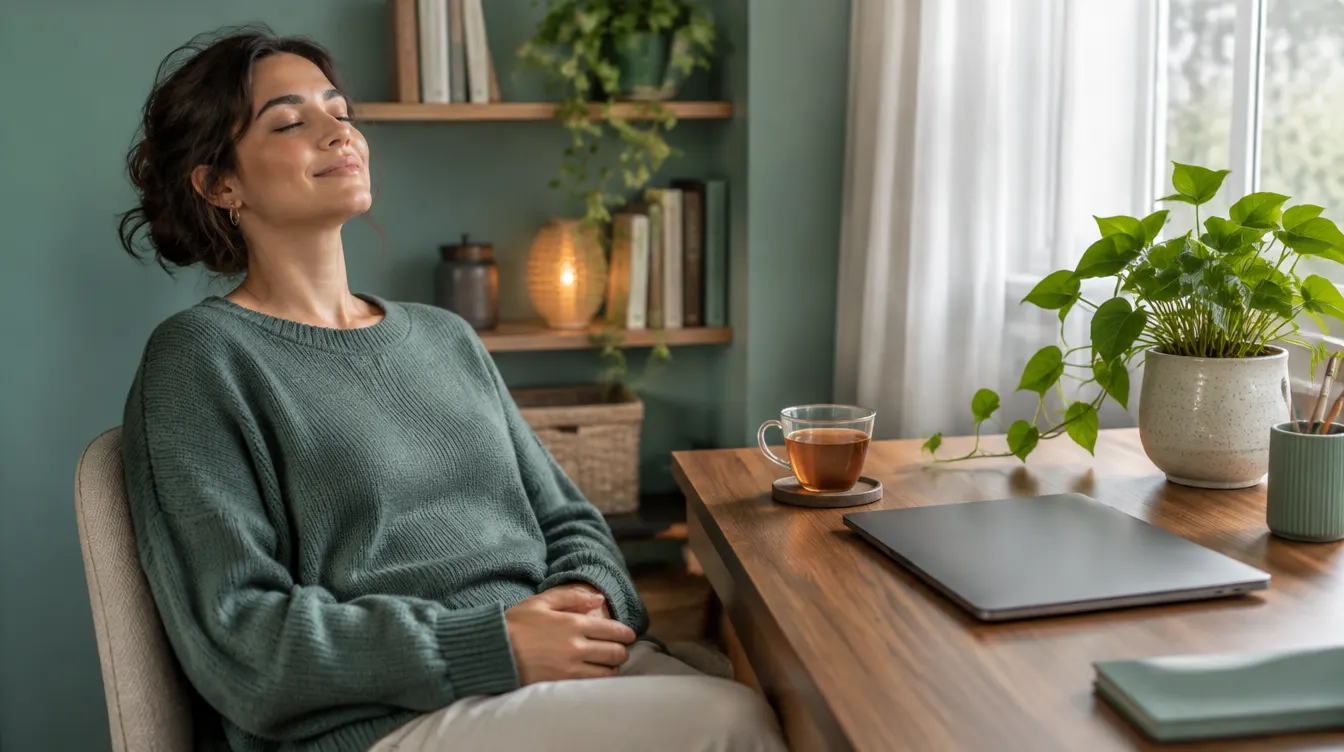
For a lot of anxious people, the worst part of the day comes before breakfast. You open your eyes and your mind is already off: the meeting, the bills, the message you haven't answered. A morning meditation for anxiety gives you a few quiet minutes before all that piles in. It won't make the day's problems disappear. It just means you meet them a bit steadier.
Why Mornings Can Feel So Anxious
Some of it is plain biology. Your body naturally releases more of the stress hormone cortisol in the first hour after you wake up. It's meant to help you get moving. If you're prone to anxiety, though, that lift can feel a lot like alarm. Then you pick up your phone, and the emails and the news add to it. Sitting quietly first sends your body a different message: we're OK, we can take this slowly.
Follow a Guided Morning Meditation

12-Minute Morning Mindfulness Meditation. A calm, clear start before the day gets going.

Only got five minutes? This short breathing meditation works just as well first thing.
A 10-Minute Morning Routine
1. Before your phone
Leave the phone where it is. Really. Sit up on the edge of the bed, or on a cushion on the floor, feet down and hands resting.
2. Three slow breaths
Breathe in through your nose, then out slowly through your mouth. Three times. Let each out-breath take its time.
3. Body check-in
How does your body feel this morning? Tight chest, heavy head, jittery legs? No need to judge it. Just notice, then soften what you can: jaw, shoulders, hands, stomach.
4. Notice the worries
The worries will turn up. Let them. Give each one a quick name, "the meeting", "money", "the kids", and imagine putting it down on the floor next to you. They'll still be there later, when you can actually do something about them.
5. Breathe and rest
For three or four minutes, just rest on your breathing. In for four and out for six, or however it naturally wants to go. When your mind runs ahead into the day, bring it back to this breath, here.
6. Set an intention
Pick one word for today. "Steady." "Kind." "One thing at a time." Say it to yourself, open your eyes, and start your day a little slower than you normally would.
Tips for Calmer Mornings
A calmer morning often starts the night before. A few small changes that make a real difference:
- Charge your phone outside the bedroom and use a cheap alarm clock instead.
- Go to bed at roughly the same time each night. Tired mornings are anxious mornings. Our sister site has free guided sleep meditations if that's a struggle.
- Get some daylight early. Open the curtains, or stand outside for a few minutes with your tea.
- If coffee makes you jittery, eat something first.
- Leave your cushion out the night before, so it's the first thing you see.
Want something longer later in the day? Try the 10-minute meditation for anxiety or these breathing exercises for anxiety.
New to all this? Meditation for Beginners explains the basics simply, so a morning practice feels natural.
If you wake up with dread most days, or anxiety is making mornings hard to get through, please talk to your GP. In Australia you can call Beyond Blue on 1300 22 4636 or Lifeline on 13 11 14, any time.
Frequently Asked Questions
Is it better to meditate in the morning or at night for anxiety?
Both help. The morning sets the tone for your day; the evening helps you unwind and sleep. If you can only manage one, choose the one you'll actually keep doing.
How long should a morning meditation be?
Five to fifteen minutes is plenty. Even three slow breaths before you check your phone is a decent start.
What if I don't have time in the morning?
Do it lying in bed before you get up, or on the bus or train. A short practice you do every day beats a long one you keep skipping.