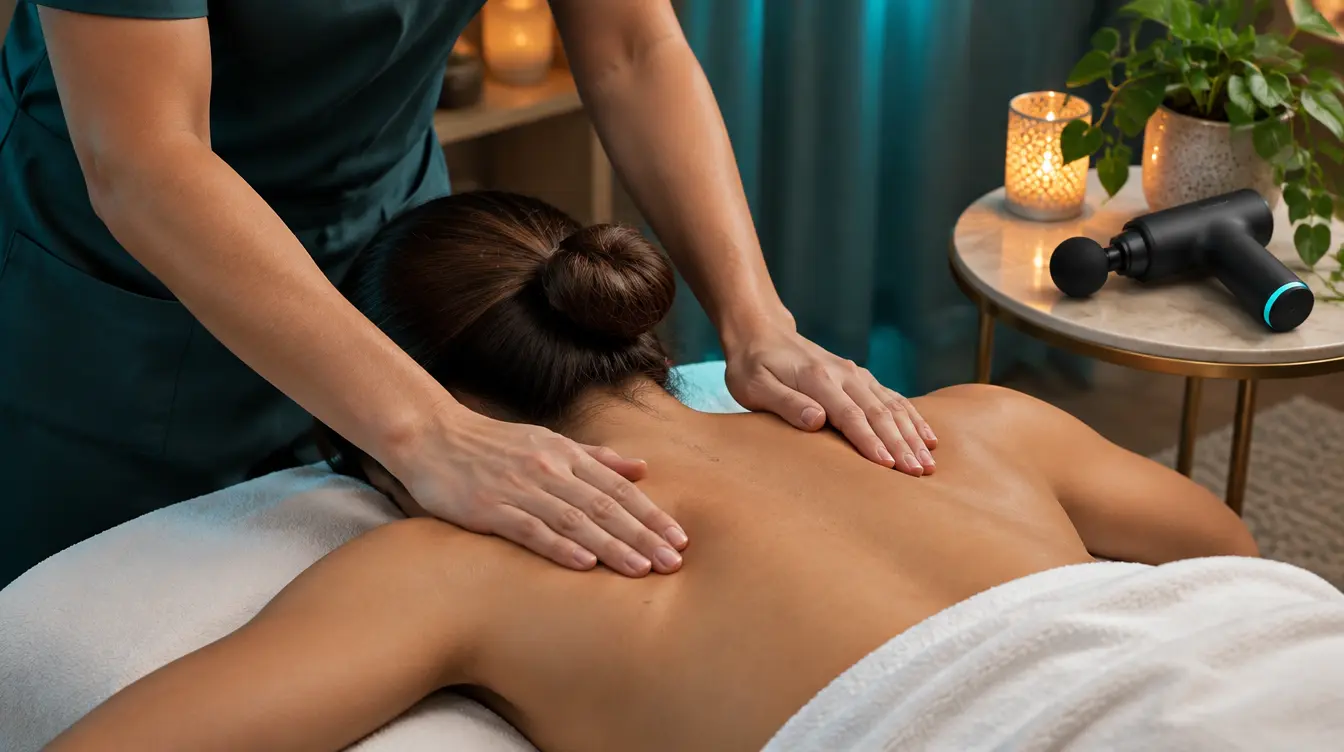
Stress lives in your shoulders, your jaw and your lower back as much as in your head. So it makes sense that a massage feels so good when you're wound up. Massage guns have made that feeling cheaper and quicker. Meanwhile meditation promises to work on the mind behind the tension. Which one should you put your time and money into?
The Short Answer
A massage is a lovely, short-term reset for body and mind. A massage gun is mostly a tool for tight, sore muscles. Meditation is the one that changes how you respond to stress over time. If you can only pick one habit, pick meditation. If you can afford the occasional massage, enjoy it.
| Massage | Massage gun | Meditation | |
|---|---|---|---|
| What it does | Hands-on relaxation of muscles, plus human touch and care | Rapid pulses into tight muscles | Calms the stress response and changes your relationship with worry |
| For stress and anxiety | Studies suggest it lowers anxiety in the short term | Little evidence beyond muscle soreness | Good evidence over weeks of regular practice |
| How long it lasts | Hours to a day or two | Short-term muscle relief | Builds up over time |
| Cost | Around $80 to $150 a session | From about $50 to several hundred, one-off | Free |
| How often | Weekly at best for most people | Daily if gentle | Daily |
Massage: Touch Matters
A good massage relaxes tight muscles, but that's only part of it. Being cared for, lying still for an hour with your phone away, and the slow rhythm of touch all calm your nervous system. Research suggests massage can reduce anxiety and stress, though the effect tends to be short-term. Think of it as a reset rather than a fix.
In Australia you can often claim remedial massage through private health extras cover, which brings the cost down.
Do Massage Guns Work?
For their main job, yes, to a point. Studies suggest massage guns can ease muscle soreness and improve short-term flexibility after exercise. That's what they're built for.
For stress and anxiety, there's very little evidence. A few minutes on your shoulders while you breathe slowly can feel good and help you notice where you hold tension. It just isn't the same as a massage, and it doesn't touch the worries behind the tension.
Massage gun safety: keep it on muscles, not bones, joints or your spine. Avoid the front and sides of your neck, any injury, bruising or swelling. If you have blood clots, a bleeding disorder, take blood thinners, or are pregnant, check with your GP or physio first.
Meditation: Working on the Cause
Massage and massage guns work from the outside in. Meditation works from the inside out. When you slow your breath and soften your body yourself, you're training your nervous system to settle on its own, which means you can do it at your desk, in traffic, or lying awake at night.
A simple way to start is a body-focused practice, which feels a lot like giving yourself a massage with your attention. Try the 5-minute meditation for anxiety (the "soften" step is all about releasing tension) or the breathing exercises for anxiety. For night-time, our sleep site has a body scan meditation for sleep.
A Good Combination
- Daily: five to ten minutes of meditation, with a slow scan for tension.
- After exercise or a long day at a desk: a few gentle minutes with a massage gun or ball.
- Monthly, or when you can: a professional massage as a treat and a reset.
Related Reading
- Ice bath vs meditation for anxiety
- Yoga vs Pilates for stress and anxiety
- Sauna, massage or meditation before bed? (guidedsleepmeditation.com)
- Wellness trends compared, and where meditation fits (spiritualcoachingguide.com)
New to meditation? Meditation for Beginners has free, easy guides.
If stress or anxiety is affecting your daily life, please talk to your GP. In Australia you can call Beyond Blue on 1300 22 4636 or Lifeline on 13 11 14.
Frequently Asked Questions
Is massage good for anxiety?
Research suggests massage can reduce anxiety and stress in the short term. Pairing it with a daily practice like meditation helps the calm last.
Do massage guns actually work?
They can ease muscle soreness and tightness after exercise. There's little evidence they help with stress or anxiety on their own.
Can meditation replace massage?
Not completely. Touch has its own benefits. But meditation is free, daily and something you can do anywhere, which makes it the better habit for ongoing stress.